
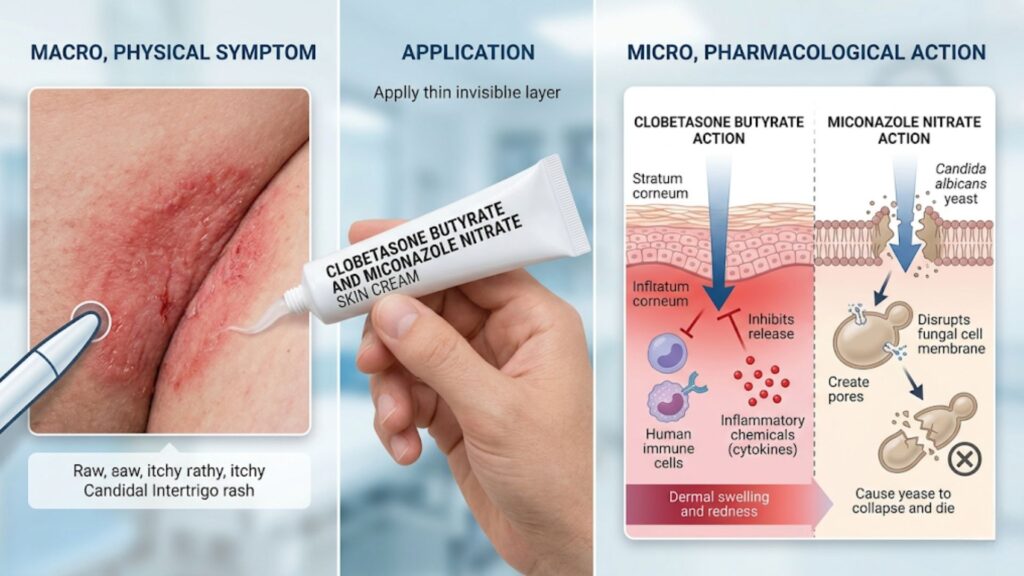
Dealing with a stubborn, intensely itchy skin rash can be incredibly frustrating, especially when it seems to worsen no matter what you do. Often, these severe flare-ups are not just simple allergic reactions; they are fungal infections that have triggered a massive inflammatory response. In these specific scenarios, treating just the fungus or just the inflammation is not enough. This is where a combination medication like clobetasone butyrate and miconazole nitrate skin cream becomes essential.
This specialized formulation is designed specifically for dermatological conditions that are both infected by fungi and highly inflamed. By merging a moderate-potency topical steroid with a broad-spectrum antifungal, the cream simultaneously stops the unbearable itching and eradicates the underlying biological cause of the infection.
Understanding exactly when to reach for this cream—and equally importantly, when to avoid it—is critical for safe, effective healing without damaging your skin barrier. In this comprehensive guide, we break down how these two active ingredients work together, the specific conditions they treat, and the safest application methods.
Understanding Combination Skin Therapy
Combination creams are heavily utilized in dermatology because the skin’s immune response to an infection is often just as damaging as the infection itself. When a fungus attacks the skin, the body responds with severe inflammation, causing redness, swelling, and intense itching. If a patient only uses an antifungal cream, the itch remains for days, causing them to scratch and potentially break the skin barrier, leading to a secondary bacterial infection. Combining the treatment provides immediate symptomatic relief while the antifungal does the heavy lifting.
How the Active Ingredients Work
To use this medication safely, you must understand the distinct pharmacological role of each component.
The Role of Clobetasone Butyrate
Clobetasone butyrate is a moderate-potency topical corticosteroid.
- Important Distinction: It should not be confused with clobetasol propionate, which is a super-high potency steroid. Clobetasone butyrate is significantly milder, making it safer for use on slightly more sensitive areas or for slightly longer durations under medical supervision.
- Mechanism of Action: It works by inhibiting the release of inflammatory chemicals in the immune system, rapidly reducing swelling, redness, and the urge to scratch.
The Role of Miconazole Nitrate
Miconazole nitrate is a highly effective, broad-spectrum antifungal agent.
- Targeted Eradication: It is highly effective against dermatophytes (the fungi that cause ringworm and athlete’s foot) and yeasts (such as Candida).
- Mechanism of Action: It works by disrupting the fungal cell membrane, causing holes to appear in the cellular structure, which ultimately kills the fungus and stops it from multiplying.
Primary Clinical Uses
This combination cream is not a general moisturizer or a cure-all for every rash. It is specifically indicated for fungal infections accompanied by severe inflammation.
Common Conditions Treated with This Combination
Skin Condition | Physical Symptoms | How the Cream Resolves It |
Inflamed Tinea (Ringworm) | Circular, red, scaly patches that are intensely itchy and swollen. | Miconazole kills the dermatophyte fungus; clobetasone flattens the raised, itchy border. |
Candidal Intertrigo | Raw, red, burning rashes in skin folds (under breasts, groin, armpits). | Eradicates the yeast overgrowth while immediately soothing the painful burning sensation. |
Severe Athlete’s Foot | Cracking, peeling skin between the toes accompanied by severe redness and pain. | Destroys the foot fungus while reducing the painful swelling that prevents walking. |
Seborrheic Dermatitis | Greasy, yellowish scales with inflamed red skin, often on the chest or face. | Reduces the immune system’s overreaction to naturally occurring skin yeasts. |
Step-by-Step Application Guidelines
To achieve maximum clinical efficacy while minimizing the risk of steroid side effects, the cream must be applied correctly.
Application Pointers:
- Clean the Area: Wash the affected skin gently with mild soap and lukewarm water, then pat it completely dry. Fungi thrive in moisture.
- Use a Thin Layer: Apply a very thin layer of the cream to the affected area and the immediate surrounding skin.
- Massage Gently: Rub it in gently until the cream disappears into the skin.
- Wash Your Hands: Always wash your hands thoroughly after application to prevent spreading the fungal infection to other parts of your body or face.
- Limit the Duration: Typically, this combination is prescribed for short-term use (usually 7 to 14 days). Once the inflammation and itching subside, your doctor may switch you to a plain antifungal cream to finish clearing the infection.
Expert Insight:
The primary mistake patients make with steroid-antifungal combinations is stopping the treatment the moment the itching stops. While the clobetasone quickly masks the symptoms by stopping the inflammation, the miconazole often needs more time to fully eradicate the fungus. Always complete the prescribed duration to prevent the infection from rebounding.
Crucial Precautions and Side Effects
While clobetasone butyrate is a moderate steroid, it still carries risks if misused.
Key safety warnings:
- Do Not Use on Viruses: This cream will not treat viral infections like cold sores (herpes), shingles, or chickenpox, and using a steroid on them can actually make them worse.
- Avoid the Face and Eyes: Unless explicitly instructed by a dermatologist, do not use this cream on the face. Steroids can cause skin thinning, acne, and perioral dermatitis on delicate facial tissue.
- Do Not Cover with Bandages: Do not use airtight dressings or bandages over the cream. Occlusion forces the steroid deeper into the skin and bloodstream, increasing the risk of systemic side effects.
- Watch for Skin Thinning: Prolonged use of any topical corticosteroid can cause skin atrophy (thinning), stretch marks (striae), and visible blood vessels.
Conclusion
Clobetasone butyrate and miconazole nitrate skin cream is a highly effective, dual-action medication designed to tackle the misery of inflamed fungal skin infections. By pairing a moderate-potency steroid to swiftly shut down redness and itching with a robust antifungal to eradicate the root cause, it provides rapid, comprehensive relief. However, because it contains a corticosteroid, it requires disciplined use. By applying it in thin layers, strictly adhering to the prescribed timeline, and avoiding sensitive areas, you can safely clear stubborn infections and restore your skin’s healthy, natural barrier.