
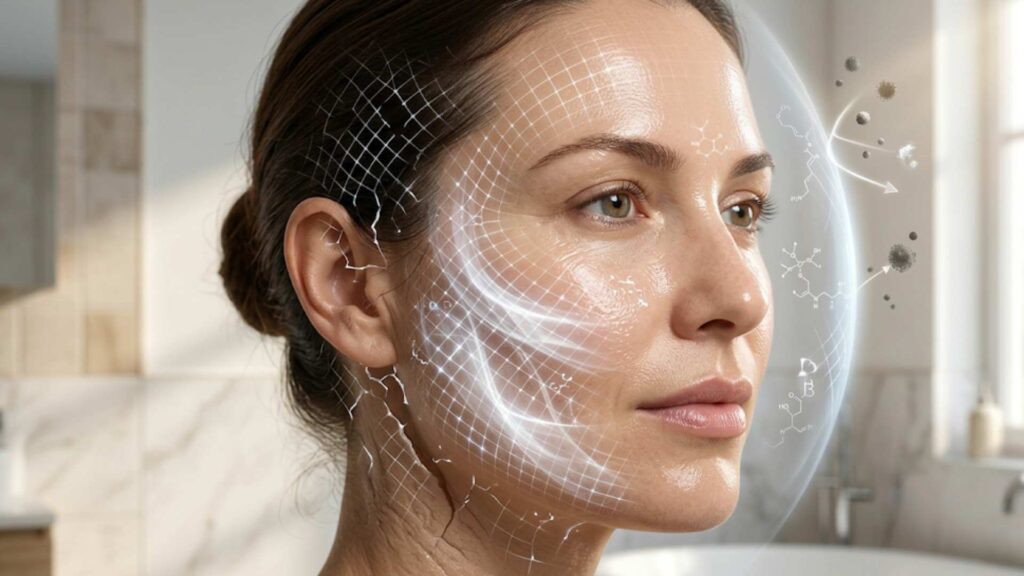
The modern daily skincare routine has become incredibly complex, often saturated with harsh exfoliating acids and potent active serums. However, the true anchor of any effective dermatological regimen is a high-quality moist lotion. While standard moisturizers merely sit on the surface of the skin to prevent dryness, advanced derma-cosmetic lotions are engineered to penetrate the stratum corneum, actively repairing cellular damage and restoring the skin’s natural lipid barrier.
As urban pollution and environmental stressors escalate, maintaining optimal skin hydration requires more than just water. It requires a precise biochemical formulation that binds moisture to the cells while defending against external pathogens. High-performance skincare brands, such as Molekulaire, have revolutionized this space by integrating technical ingredients like hyaluronic acid, peptides, and niacinamide into lightweight, fast-absorbing lotion bases.
Understanding the deeper clinical role of this formulation is critical to achieving long-term skin health. In this comprehensive breakdown, we explore the hidden biochemical benefits, the exact active ingredients, and the strategic application methods that make a clinical moist lotion the most important step in your daily routine.
Moving Beyond Basic Hydration
A common misconception is that all moisturizers perform the same function. In clinical dermatology, the distinction between a heavy, occlusive cream and a highly penetrative lotion dictates the health of your pores and your skin’s cellular turnover rate.
Hidden benefits of a specialized moist lotion:
- Micro-Emulsion Delivery: Unlike thick creams that can clog pores, a clinical lotion uses micro-emulsions to deliver active ingredients deep into the dermal layers without leaving a greasy residue.
- Environmental Shielding: Modern lotions contain specialized antioxidants that actively neutralize free radicals caused by UV exposure and heavy urban pollution.
- Sebum Regulation: By providing optimal hydration, the lotion prevents the skin’s sebaceous glands from overcompensating and producing excess oil, directly reducing acne breakouts.
The Chemistry of a Clinical Moist Lotion
The efficacy of a derma-cosmetic lotion is entirely dependent on its active pharmaceutical ingredients (APIs). A premium formulation leverages a precise blend of humectants, emollients, and cellular communicators.
Hyaluronic Acid and Cellular Moisture Retention
Hyaluronic acid is the undisputed gold standard for intense, weightless hydration.
Key functional pointers of hyaluronic acid:
- Massive Water Binding: A single molecule of hyaluronic acid can hold up to 1,000 times its weight in water, pulling ambient moisture directly into the skin cells.
- Multi-Molecular Weights: Advanced lotions use varying molecular weights of the acid; low molecular weights penetrate deeply for cellular plumping, while high weights sit on the surface to instantly smooth fine lines.
- Non-Comedogenic Hydration: It provides massive hydration without introducing heavy oils, making it the perfect active ingredient for acne-prone and sensitive skin profiles.
Niacinamide for Barrier Fortification
Also known as Vitamin B3, niacinamide is a powerhouse ingredient that transforms a standard moist lotion into an active therapeutic treatment.
Key functional pointers of niacinamide:
- Ceramide Production: It actively stimulates the skin’s natural production of ceramides, rebuilding the compromised lipid barrier damaged by over-exfoliation.
- Redness Reduction: Niacinamide possesses strong anti-inflammatory properties, instantly calming the erythema (redness) associated with rosacea and severe acne.
- Pore Refinement: Continuous daily application normalizes the pore lining, preventing debris buildup and visibly reducing the appearance of enlarged pores.
Expert Insight:
The greatest mistake patients make is applying active treatments without repairing the structural damage first. A premium moist lotion fortified with peptides and niacinamide doesn’t just hydrate; it physically rebuilds the skin’s architectural matrix. Without this stable foundation, expensive serums simply evaporate through a compromised barrier.
How a Moist Lotion Prevents Transepidermal Water Loss
To understand how a clinical lotion works, you must look at the mechanical failure of dry skin.
Transepidermal Water Loss (TEWL) and Formulation Impact Table
Skincare Mechanism | What Happens Without a Moist Lotion | How the Moist Lotion Corrects It |
Barrier Integrity | Micro-tears allow essential cellular water to evaporate into the atmosphere (High TEWL). | Emollients fill the microscopic gaps between skin cells, instantly halting water evaporation. |
Cellular Plumping | Dehydrated cells shrivel, causing the skin to look dull, textured, and prematurely aged. | Humectants (like glycerin and hyaluronic acid) draw water back into the cells, restoring volume. |
Pathogen Defense | A dry, cracked barrier allows acne-causing bacteria and pollutants to enter the dermal layers easily. | A continuous, lightweight lipid film forms a physical shield against environmental pathogens. |
Active Ingredient Efficacy | Expensive serums evaporate rapidly into the air before they can be fully absorbed by the skin. | The lotion acts as an occlusive sealant, pushing preceding serums deeper into the skin for maximum efficacy. |
Strategic Routine Integration: When and How to Apply
Even the most chemically advanced formulation will fail if applied incorrectly. Strategic application ensures the ingredients are locked into the skin.
Exact pointers for maximum absorption:
- The ‘Damp Skin’ Rule: Always apply your moist lotion within 60 seconds of washing your face, while the skin is still slightly damp. This allows humectants to trap the surface water and pull it inward.
- Layering Order: Apply the lotion after lightweight toners and active serums (like Vitamin C or Retinol), but before heavy sunscreens or makeup.
- Gentle Patting Technique: Do not rub the lotion aggressively into the face. Gently pat and press the formulation into the skin to stimulate microcirculation and prevent friction-induced inflammation.
- Twice-Daily Consistency: Cellular hydration drops overnight. Applying the lotion both morning and night ensures the lipid barrier is continuously supported during the skin’s natural regenerative cycle.
Future-Proofing Your Epidermal Health
Achieving a resilient, glass-like complexion does not require an overwhelming 10-step routine; it requires scientific precision. By integrating a medically formulated moist lotion into your daily skincare regimen, you do far more than temporarily relieve dryness. You actively rebuild the stratum corneum, stimulate ceramide production, and trap vital cellular water to halt premature aging. Brands at the forefront of derma-cosmetics understand that combining humectants like hyaluronic acid with barrier-repairing peptides is the ultimate key to long-term dermatological health. Make this crucial step the foundation of your routine, and your skin will remain defended, hydrated, and structurally sound for decades to come.