
Finding the Best Derma Company in India is no longer just about picking a recognizable brand name; it requires identifying a manufacturing powerhouse capable of delivering absolute clinical precision. Over the past five years, the Indian skincare sector has transitioned rapidly from over-the-counter cosmetic fixes to highly advanced, medically prescribed dermatological therapies. With rising urban pollution, intense coastal humidity, and an affluent demographic demanding premium aesthetic care, prescribing dermatologists are seeking out manufacturers that prioritize scientific integrity above all else.
In this highly competitive landscape, true market leaders distinguish themselves by operating state-of-the-art research facilities, maintaining flawless supply chains, and engineering formulations that actively repair cellular structures. Whether treating severe cystic acne, chronic psoriasis, or environmental hyperpigmentation, the clinical efficacy of a product is entirely dependent on how it is formulated on the factory floor.
For regional distributors, franchise owners, and top-tier medical practitioners, partnering with an industry veteran is the only way to guarantee consistent patient outcomes. In this comprehensive guide, we break down the strict manufacturing protocols, expansive therapeutic portfolios, and operational advantages that define India’s most trusted dermatology companies.
The Transformation of Indian Clinical Dermatology
The days of relying on basic moisturizing creams are over. The modern patient is educated, highly discerning, and expects rapid, measurable results from their specialized skincare routines.
Factors driving the shift toward clinical dermatology:
- Aesthetic Integration: The blending of healthcare and beauty has created a massive demand for cosmeceuticals—products featuring medical-grade active ingredients like encapsulated retinoids and hyaluronic acid.
- Environmental Damage: Surging levels of airborne industrial pollutants are actively destroying the skin’s lipid barrier, leading to a nationwide spike in adult acne and severe contact dermatitis.
- Preventative Skincare: Consumers are increasingly adopting oral dermatology and preventative systemic treatments (such as high-grade antioxidants) to delay cellular aging before it begins.
Core Pillars That Define Market Leadership
Earning the title of a top-tier manufacturer requires massive infrastructural investment. The best companies operate on a foundation of strict compliance and technological innovation.
Uncompromising WHO-GMP Manufacturing Standards
In dermatology, the skin barrier absorbs highly potent active pharmaceutical ingredients (APIs). A single contaminated batch can cause severe site irritation and permanently destroy a doctor’s trust in a brand.
Crucial manufacturing compliances include:
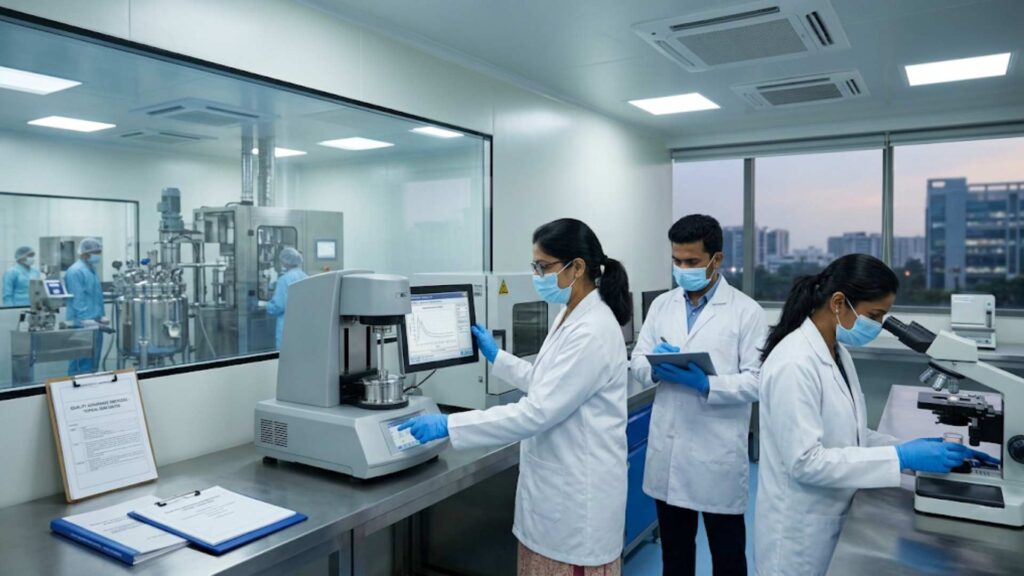
- Sterile Cleanrooms: Utilizing positive air-pressure environments and advanced HEPA filtration to eliminate any microscopic cross-contamination between different drug batches.
- Automated Compounding: Leveraging Clean-in-Place (CIP) technology to ensure massive mixing vessels are perfectly sanitized without the risk of human error.
- Rigorous Efficacy Testing: Conducting extensive In Vitro Release Testing (IVRT) to prove mathematically that the active ingredient actually penetrates the dermal layers at the correct speed.
Mastering Phase Stability and Packaging Innovation
A clinically perfect emulsion is useless if it degrades during transit. Premium manufacturers prioritize formulation stability against extreme Indian weather conditions.
How elite companies protect their products:
- Thermal Cycling: Subjecting creams and gels to extreme temperature variations in the lab to ensure the oil and water phases do not separate inside the tube during intense summer heat.
- Light-Proof Packaging: Utilizing highly specialized lami tubes and opaque bottles to prevent sensitive ingredients like L-Ascorbic Acid (Vitamin C) from oxidizing.
- Airless Pump Technology: Deploying vacuum-sealed airless pumps for advanced serums to prevent oxygen exposure and microbial contamination from human fingers.
Expert Insight:
The true test of a premier dermatology manufacturer is not just the ingredients they use, but how they stabilize them. A generic Vitamin C serum might be potent on day one, but without advanced airless packaging and precise pH balancing, it oxidizes into a useless, irritating compound within a month. Clinical reliability is 100% reliant on manufacturing stability.
Strategic Product Portfolio Depth
A prescribing dermatologist addresses dozens of different skin profiles daily. An elite corporate partner must supply a comprehensive range of clinical dermatology products to cover an entire prescription pad.
Essential categories maintained by top companies:
- Acute Therapeutics: High-strength anti-fungal dusting powders, potent corticosteroid ointments, and advanced anti-scabietic lotions.
- Targeted Acne Management: Non-comedogenic Adapalene and Clindamycin gels that clear cystic blockages without excessively stripping the skin’s moisture barrier.
- Advanced Cosmeceuticals: High-margin barrier repair creams featuring ceramides, skin-brightening Glutathione supplements, and broad-spectrum matte sunscreens.
- Trichology Regimens: Comprehensive hair-loss solutions including topical Minoxidil, peptide serums, and systemic Biotin complexes.
Comparing Specialized Derma Manufacturers to General Pharma
To understand why doctors prefer specialized companies, one must look at the fundamental differences in how topical medications are engineered compared to oral generics.
Pharma vs. Specialized Derma Manufacturing Table
Manufacturing Metric | General Pharma (Oral/Injectable) | Specialized Derma Manufacturer | Clinical Impact |
Formulation Focus | Bioavailability in the digestive tract and bloodstream. | Stratum corneum penetration, spreadability, and localized retention. | Derma requires complex microstructural (Q3) engineering for skin absorption. |
Stability Testing | Focus on API degradation over time in standard blister packs. | Focus on phase separation, rheology, and oxidation in semi-solids. | Prevents creams from cracking or becoming gritty in high temperatures. |
Packaging Requirements | Standard Alu-Alu or PVC blister packs for tablets. | Specialized lami tubes, airless pumps, and non-reactive applicator tips. | Protects sensitive topical actives from daily air and light exposure. |
Product Aesthetics | Irrelevant; focused purely on swallowing or injection ease. | Crucial; focus on non-greasy textures, matte finishes, and pleasant odor. | Drives long-term patient compliance and daily regimen adherence. |
Empowering the Nationwide Distribution Network
Companies like Gary Pharmaceuticals do not just manufacture great products; they build highly resilient distribution networks. By offering exclusive monopoly rights to regional PCD franchise owners, they protect local retail margins and prevent internal brand cannibalization. Furthermore, by providing world-class promotional support including scientific detailing folders, ample trial samples, and digital tracking tools they empower their distributors to dominate urban healthcare markets. When a company perfectly aligns its WHO-GMP manufacturing excellence with aggressive, supportive franchise distribution, it rightfully earns its position as the most trusted derma company in the nation.
Conclusion
Securing the position of the premier dermatology company in India requires an unwavering commitment to clinical safety, advanced R&D, and manufacturing excellence. As the demand for specialized cosmeceuticals and targeted therapeutics continues to surge across the subcontinent, doctors and patients alike are relying on trusted corporate leaders to deliver stable, highly effective formulations. By enforcing strict WHO-GMP cleanroom standards, pioneering protective packaging innovations, and offering comprehensive product portfolios, top-tier manufacturers ensure consistent medical outcomes. For regional distributors and franchise owners, aligning with an established, quality-obsessed parent company is the ultimate strategy for capturing a dominant share of India’s booming clinical skincare market.