
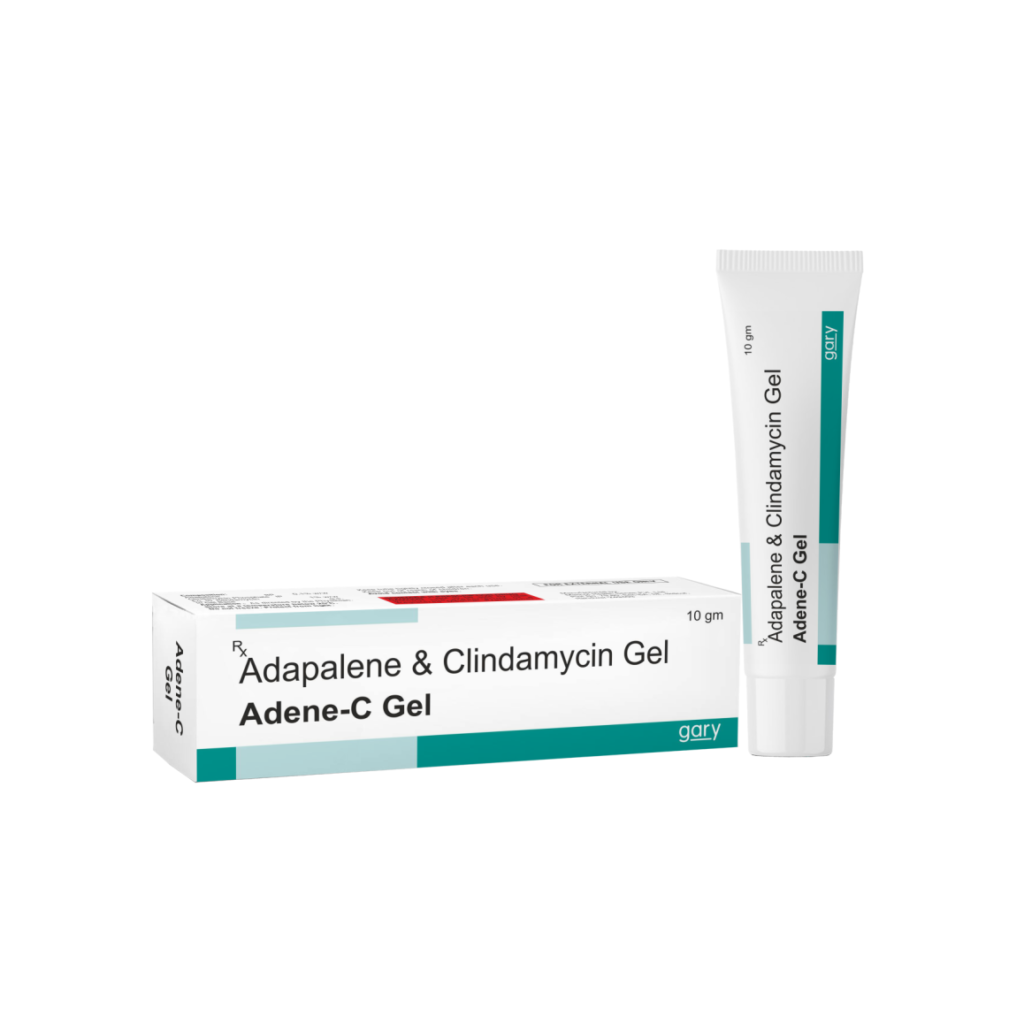
Adapalene Gel is a topical retinoid used in the management of acne vulgaris. It works on processes involved in abnormal follicular keratinization and acne lesion formation. When adapalene is combined with clindamycin, the formulation brings together a topical retinoid and a topical antibiotic, providing complementary mechanisms within an anti-acne formulation. Current acne guidance includes topical retinoids and topical antibiotics among recommended therapies
Acne is one of the most common skin concerns, and topical formulations continue to play an important role in acne care. Among these, Adapalene Gel is widely used as a topical retinoid, while formulations that combine adapalene with clindamycin bring together two active ingredients with different roles.
For pharmaceutical companies, distributors and businesses working in dermatology, understanding these formulations is useful when evaluating an anti-acne product range. The active ingredients, their strengths, formulation type, intended application and the quality of the pharmaceutical product all contribute to where a formulation fits within the wider dermatology market.
Understanding Adapalene Gel and Its Role in Acne Care
Adapalene for Acne is particularly relevant because adapalene belongs to the topical retinoid class. Retinoids are used in acne care because they help address processes that contribute to clogged pores and the formation of acne lesions. Current American Academy of Dermatology guidelines strongly recommend topical retinoids, including adapalene, as part of acne management.
What makes adapalene different from topical antibiotics is the way it works. Adapalene is a retinoid rather than an antibacterial ingredient, so its role in an acne formulation is different. This is important when looking at products that contain adapalene alone as well as formulations where it is combined with another active ingredient.
For someone searching for Adapalene Gel for Acne, the question is therefore not only whether adapalene is present. It is also useful to understand why it is used, how it differs from other acne ingredients and why it may be included in a combination formulation.
For pharmaceutical businesses, the same distinction matters from a product perspective. An anti-acne formulation needs to be considered as a complete product, including its active ingredients, strengths, dosage form, intended use and place within a dermatology portfolio.
Why Adapalene and Clindamycin Are Combined in Acne Formulations
The interest around Clindamycin and Adapalene Gel and Adapalene and Clindamycin Gel reflects a more specific question within acne care: why combine these two ingredients in the same topical formulation?
Adapalene is a topical retinoid, while clindamycin is a topical antibiotic. Because they have different roles, combining them allows a formulation to use two different mechanisms rather than relying on a single active ingredient. Current AAD guidance supports the use of topical therapies with multiple mechanisms of action when appropriate.
This combination has also been studied clinically. A Phase III randomized clinical trial involving 1,617 patients with moderate facial acne vulgaris evaluated a fixed-dose gel containing adapalene 0.1% and clindamycin 1%. After 12 weeks, the combination produced a greater reduction in total lesion count than either adapalene or clindamycin alone, while adverse events were generally mild to moderate.
This evidence makes the combination relevant when discussing modern topical acne formulations. It also explains why searches for Adapalene and Clindamycin Gel represent a more specific formulation intent than a broad search for acne products.
However, the presence of an antibiotic also means that such formulations need to be positioned responsibly. Current acne guidance emphasizes appropriate use of topical therapies and responsible antibiotic practices. The purpose of understanding the combination is therefore to explain its formulation and role, not to suggest that one product is suitable for every acne case.
What Should Pharmaceutical Businesses Consider When Evaluating an Adapalene-Based Formulation?
For a pharmaceutical distributor, stockist or potential franchise partner, evaluating an Adapalene Gel for Acne product involves more than looking at the ingredient name.The formulation itself is an important starting point. Businesses may need to consider the active ingredients and their strengths, dosage form, intended dermatological application, product documentation and quality standards. Manufacturing capability and consistency of supply are equally important when selecting products for a pharmaceutical portfolio.
The combination strategy also matters. A single-active adapalene formulation and an adapalene-and-clindamycin formulation can have different roles within an anti-acne range. Understanding this difference allows businesses to evaluate products based on their intended application and market requirements rather than simply choosing products because one ingredient is well known.
For B2B pharmaceutical businesses, this broader approach can help create a more relevant dermatology portfolio. Instead of looking at an individual product in isolation, businesses can assess how its formulation, quality, manufacturing capabilities and intended market fit alongside the rest of their range.
This becomes particularly important for distributors and franchise businesses that need products capable of supporting a specific dermatology segment rather than simply increasing the number of products in their catalogue.
Adene-C Gel: An Adapalene and Clindamycin Formulation by Gary Pharmaceuticals
Gary Pharmaceuticals Adene-C Gel provides a direct example of an adapalene-and-clindamycin formulation. According to Gary’s product information, Adene-C contains Adapalene 0.1% and Clindamycin Phosphate 1% and is positioned as a topical formulation for acne vulgaris.
The product brings together a topical retinoid and topical antibiotic in one gel, making it directly relevant to the Adapalene and Clindamycin Gel formulation category. For pharmaceutical businesses evaluating Anti-acne products, this provides a practical example of how the two active ingredients can be positioned within a dermatology portfolio.
For distributors, stockists and potential pharmaceutical partners, Adene-C can be considered alongside Gary Pharmaceuticals’ wider dermatology range according to the requirements of their market, customer base and product portfolio.
What Makes Combination Formulations Relevant to the Dermatology Market?
The demand for dermatology products increasingly requires pharmaceutical businesses to look at formulations according to their therapeutic purpose rather than simply their product category.
In acne care, this means understanding the difference between a retinoid-based formulation, an antibiotic-based formulation and a combination that brings different mechanisms together. For businesses operating in B2B pharmaceutical markets, these distinctions can influence product selection, portfolio development and market positioning.
The adapalene and clindamycin gel category is therefore worth evaluating from both a formulation and business perspective. The clinical relevance of the active combination provides one part of the picture, while manufacturing quality, documentation, supply capability and portfolio breadth determine how effectively a pharmaceutical company can support the product in the market.
Why Gary Pharmaceuticals’ Dermatology Portfolio Matters for B2B Partners
For pharmaceutical distributors, stockists and franchise partners, selecting an anti-acne formulation is only one part of building a strong dermatology portfolio. The pharmaceutical company behind the product also matters. Product range, manufacturing capabilities, quality standards, formulation expertise and the ability to support different dermatology requirements can all influence a long-term B2B partnership.
Gary Pharmaceuticals is focused on dermatology products across multiple categories and dosage forms, including gels, creams, ointments, lotions, shampoos, tablets and capsules. Its portfolio includes dedicated anti-acne products alongside other dermatology formulations, giving businesses the opportunity to evaluate products as part of a broader range rather than as isolated offerings.Within this portfolio, Adene-C Gel represents Gary’s adapalene-and-clindamycin formulation, combining Adapalene 0.1% and Clindamycin Phosphate 1% in a topical gel for acne vulgaris.
Businesses interested in expanding their dermatology portfolio can therefore explore Adene-C alongside Gary Pharmaceuticals’ wider range of dermatology products and evauate the opportunities according to their product requirements, territory and business objectives.